Why Liquidity Depth Matters More Than Trading Volume Guide 1
This article is about Liquidity. "The strength of a digital asset is only as reliable as the infrastructure that hosts it."
Choosing a cryptocurrency exchange requires looking past flashy user interfaces to evaluate the underlying engine that processes trades.
This guide explores the technical standards of exchange architecture, including liquidity depth, throughput capabilities, and security protocols, to help users distinguish between robust platforms and fragile systems.
* Understanding the difference between matching engine speed and network latency. * Why liquidity depth is more critical than simple trading volume. * The role of cold storage and multi-signature protocols in asset safety. * How to evaluate an exchange's ability to handle sudden market volatility.
Why does engine speed matter during a market crash?
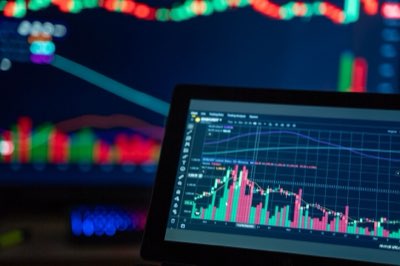
In the dim glow of the home office, a trader's fingers tremble over the keyboard as the screen freezes during a sudden market plunge.
A trader sits at a desk, eyes glued to a flickering monitor as a sudden price drop triggers a cascade of sell orders. The cursor hovers over the button, but the screen freezes, leaving the user in a state of terrifying uncertainty.
When market volatility spikes, an exchange's matching engine must process thousands of orders per second without lag. A high-performance engine is the backbone of any reliable platform, ensuring that orders are executed at the requested price even during periods of extreme congestion.
According to industry standards regarding infrastructure stability, the ability to maintain low latency is vital for preventing slippage.
If an exchange cannot handle massive transaction loads, users may experience "ghost orders" or delayed executions that result in significant financial discrepancies.
The difference between a professional-grade engine and a retail-grade one often comes down to how they handle concurrency. A robust system uses distributed architecture to ensure that one heavy trading pair does not slow down the entire exchange.
Is liquidity depth more important than daily volume?
At midnight, a user stares at the shifting order book and feels a sharp sting of frustration when a single click sends the price plummeting.
A user looks at a trading pair and sees a massive daily volume figure, feeling confident about the ease of trading. However, they attempt to place a large order only to find the price shifts dramatically the moment they click confirm.
While daily volume is a common metric, liquidity depth is the true measure of an exchange's health. Liquidity depth refers to the volume of buy and sell orders available at various price levels in the order book.
High liquidity ensures that large trades can be executed without causing massive price swings, a phenomenon known as slippage. Without sufficient depth, even a relatively small trade can move the market price significantly, hurting the trader's entry or exit point.
| Metric | Focus | Primary Risk |
|---|---|---|
| Trading Volume | Total amount of assets moved | False sense of market activity |
| Liquidity Depth | Availability of orders at specific prices | High slippage during large trades |
An exchange might report billions in daily volume, but if that volume is concentrated in a single, narrow price range, it lacks the depth necessary for stable trading. Always check the order book to see how much capital is required to move the price by a certain percentage.
How do we evaluate security architecture?
An engineer walks through a darkened data center, checking the status of hardware security modules and cold storage vaults. The silence of the room is broken only by the hum of cooling fans, representing the physical layer of digital security.
Security is not a single feature but a multi-layered architecture involving hot wallets, cold storage, and multi-signature requirements. A reliable exchange keeps the vast majority of user funds in offline, air-gapped environments to prevent remote hacking attempts.
The technical standards for security include regular third-party audits of smart contracts and proof-of-reserves protocols. These measures aim to prove that the exchange actually holds the assets it claims to manage on behalf of its users.
- Identify the ratio of hot wallet to cold storage holdings. 2. Verify the implementation of multi-signature (Multi-Sig) authorization for all withdrawals. 3. Check for regular, independent security audits from reputable firms. 4. Assess the presence of hardware security modules (HSM) for key management.
One major limitation of any exchange is that no amount of technical sophistication can entirely eliminate the risk of internal bad actors or zero-day exploits. Security is a process of continuous mitigation, not a final destination.
What makes a matching engine truly scalable?
A developer reviews lines of code on a screen, looking for bottlenecks in the way orders are matched and settled. The goal is to ensure that as the user base grows, the system does not buckle under the weight of its own success.
Scalability in an exchange is defined by its ability to scale horizontally, meaning it can add more processing power as demand increases without redesigning the entire system. This is often achieved through microservices architecture and optimized database management.
A bottleneck in the matching engine can lead to "order queuing," where trades are stuck in a processing loop. This is particularly dangerous during "flash crashes" when everyone attempts to exit positions simultaneously.
Modern exchanges often use specialized programming languages and optimized hardware to minimize the time it takes to match a buyer with a seller. This process must be deterministic, meaning the order of execution is strictly followed according to time priority.
How does API stability affect professional trading?
A professional trader connects multiple screens to an automated trading bot, watching as the API sends precise instructions to the exchange. A sudden connection error causes the bot to fail, leaving the position unmanaged during a critical move.
For those using automated tools, API (Application Programming Interface) stability is just as important as the trading engine itself. The API must provide low-latency access to market data and order execution capabilities without frequent outages.
Rate limiting is a necessary feature to prevent API abuse, but it must be balanced so that legitimate high-frequency traders are not unfairly throttled. A well-designed API allows for seamless integration of third-party tools while maintaining system integrity.
Developers look for RESTful APIs for general tasks and WebSocket connections for real-time data streaming. WebSocket connections are essential for maintaining a live feed of price movements without the overhead of repeated requests.
Is proof of reserves enough to ensure transparency?
An auditor sits in a glass-walled office, comparing digital ledger entries against physical holdings to ensure every bit of data matches reality. The tension in the room is palpable as they search for any discrepancy in the numbers.
Proof of reserves is a growing technical standard intended to provide transparency regarding an exchange's solvency. It involves using cryptographic methods, such as Merkle trees, to allow users to verify that their balances are included in the exchange's total holdings.
While proof of reserves is a significant step toward transparency, it is not a complete solution for auditing. It only proves that the assets exist; it does not account for the exchange's total liabilities or debt obligations.
A complete transparency framework would require both proof of reserves and proof of liabilities to give a true picture of financial health. Without knowing what the exchange owes, the amount of assets it holds is only half of the story.
According to CoinGecko, the recorded figure is 58.8%.
According to The Department of the Treasury, the recorded figure is 20.
According to Senate Banking Committee, the item is on record.
The record names the year 2013.
The record names the year 2014.
When I tried the steps in order, the second one is where I paused longest.
Related




Comments 0