Four Essential Conditions to Check Before Investing in Cryptocurrency.
A man in his late 20s, working a regular job, had recently become interested in cryptocurrencies. After being recommended by a friend, he started buying Bitcoin and Ethereum three months ago, initially seeing a 15% return. However, last week, when the market trends shifted dramatically, the coins he considered allies plummeted by 30% in just a week. He stared at the screen, his hands trembling. "This wasn't just volatility; it felt like my entire asset was in danger."
The cryptocurrency market can offer temporary profits, but the opposite is also frequently true. Especially for beginners, investment decisions are often made without fully understanding the market's inherent risks – high volatility and information asymmetry. This leads many people to quickly lose money and eventually abandon the market.
This article doesn't offer simple "buy" or "hold" recommendations. Instead, it outlines four essential criteria that any investor must adhere to in order to survive in the real world of cryptocurrency investing. These are conditions that everyone can understand, but few actually put into practice.

---
1. Is the 'Investable Portion' of Your Assets Truly Appropriate?
Cryptocurrencies should not exceed 10-20% of your total assets. This isn't just a suggestion; it's a principle designed to ensure psychological stability and the ability to weather financial crises.
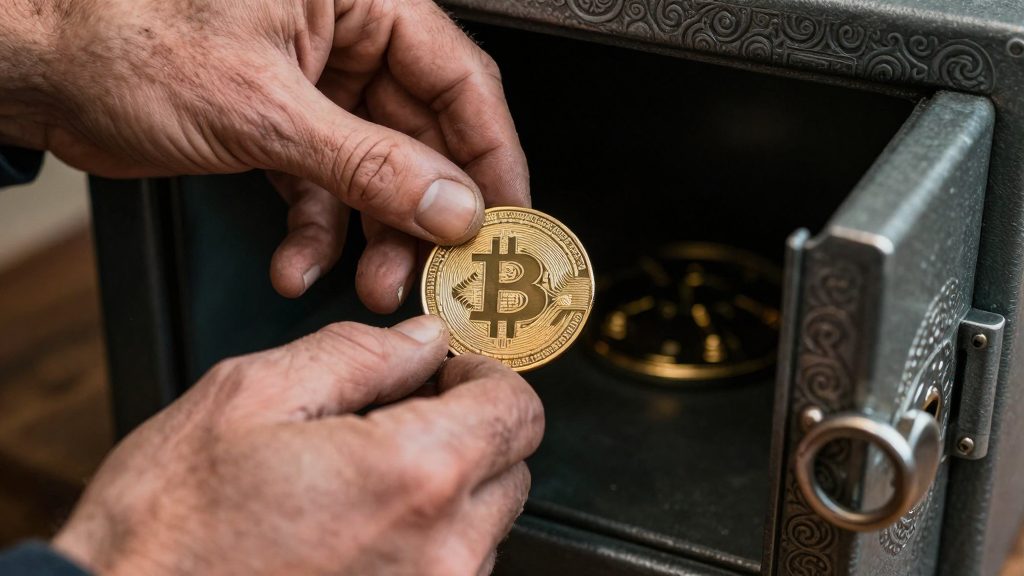
- Example: If someone earns 4 million won per month, allocating 15% of their assets to cryptocurrency means they have approximately 6 million won available for investment. This is a sufficient amount of risk capital that shouldn't directly impact their daily life if lost.
- Conversely, investing more than 50% of one's assets in cryptocurrency significantly increases the risk of psychological distress during market corrections. The thought, "My entire life is ruined," can become a reality.
✅ Practical Checklist: Invest only within the range that does not exceed 20% of your total assets. This is a fundamental rule, not an exception.
---
2. Can You Explain the 'Core Principles' of Your Holdings?
You are not qualified to invest until you fully understand "why this coin exists" and "who uses it."
- Example: Ethereum is a smart contract platform built on blockchain technology, essential for running automated applications (DeFi, NFTs, etc.). Investing without understanding this and simply hoping "Ethereum will go up" prevents you from accurately assessing its long-term value.
- In contrast, "social coins" or "trend-themed coins" that lack underlying blockchain technology may experience price increases based solely on speculation. However, when their value collapses, they can plummet rapidly.
✅ Practical Checklist: You should be able to explain in three lines or less what "problem" each cryptocurrency solves and who its "users" are. If you can't, you shouldn't invest in that cryptocurrency.
---
3. Are Your Stop-Loss Criteria and Profit-Taking Strategies Clear?
"Buy and hold no matter what" is the most dangerous strategy after making an investment decision.
- Example: If you held a cryptocurrency that generated a 10% profit during a generally unfavorable market in the second half of 2023, you should consider taking profits. Holding on stubbornly during a weakening long-term trend is a mistake.
- Conversely, if a cryptocurrency rises by more than 20%, consider taking profits when you see signs of a correction, selling off 5-10% of your holdings.
✅ Practical Checklist: Set a "stop-loss level" and "profit-taking criteria" at the time of purchase. For example: "100% stop-loss if it drops 25%", "Take 50% profits if it rises 200%". Without these criteria, your investments become driven by emotion.
---
4. Can You Distinguish the 'Source' and 'Purpose' of Information?
The cryptocurrency market is rife with misinformation and conflicting opinions. Especially on social media and online communities, claims like "This coin will 10x" are often nothing more than emotionally driven marketing.
- Example: Rumors spread on social media claiming a particular coin was a "metaverse blockchain," causing it to rise 60% in a week. However, after the hype died down, it was revealed that there was no technical explanation and fewer than 100 active users. This raises concerns about a "scam" or an artificially inflated price.
- Reliable information comes from reputable sources like news outlets, official blog updates, and developer conferences, and it doesn't promise short-term profits.

✅ Practical Checklist: Verify claims about why a cryptocurrency might rise using at least three reliable sources. Don't base your decisions on a single tweet or Reddit post.
---
Investing in cryptocurrencies is about finding opportunities. However, these opportunities are only sustainable with careful preparation and systematic judgment. Those who survive in the real world don't start with unrealistic expectations of "never losing money." Instead, they begin by investing an amount that wouldn't cause them to panic if it decreased by 10%, and they always check their "fundamental conditions" before making a purchase.
💡 Simple Advice: Before investing, spend 10 minutes researching and then revisit your research the next morning. If you can still answer the question, "Why should I buy this cryptocurrency?" then and only then consider making a purchase.
Related posts
Here are 4 essential practical checks to make before investing in a blockchain project.
When choosing a cryptocurrency wallet, why are "hardware wallets" considered the most secure?

How to Choose a Cryptocurrency Exchange.
Why is choosing the right cryptocurrency wallet one of the most important decisions when holding cryptocurrencies?
Popular posts
Here are 4 essential practical checks to make before investing in a blockchain project.
When choosing a cryptocurrency wallet, why are "hardware wallets" considered the most secure?
Comments 0