Why is choosing the right cryptocurrency wallet one of the most important decisions when holding cryptocurrencies?
For those new to cryptocurrency, choosing where to store your coins is a more important decision than simply buying them. This choice of "wallet" can lead to various problems, such as loss of funds, hacking risks, and failed transactions, if the wrong one is selected. So, what makes a wallet truly safe and practical? This article provides a practical guide to the different types of cryptocurrency wallets and the criteria for choosing the right one.
What Types of Cryptocurrency Wallets Are There?
- Hardware Wallets (e.g., Ledger, Trezor)
- > In a nutshell: The most secure type of wallet. It stores your private keys on a physical device, preventing external intrusion.
- > More details: Built-in security modules, touch recognition, and PIN codes help prevent hacking. Because hardware wallets are not exposed to malware, they are much more secure than desktop or mobile apps. However, they have an initial purchase cost and can be difficult to recover if lost.
- Software Wallets (e.g., MetaMask, Trust Wallet)
- > In a nutshell: Digital wallets that can be used on your computer or smartphone. They offer excellent accessibility and convenience.
- > More details: Most are free and can be easily installed as a mobile app. However, if your smartphone is hacked or infected with a virus, your funds could be exposed. The security level depends heavily on the device itself and the app's update status.
- Online Wallets (e.g., wallets built into exchanges like Bithumb or Coinone)
- > In a nutshell: The most convenient, but also the riskiest type of wallet. There is a risk of losing your assets if the exchange goes bankrupt or is hacked.
- > More details: Because you don't manage your private keys directly with an exchange wallet, they are convenient for buying and selling coins. However, if the exchange is hacked, all your assets are at risk. Most users do not use exchange wallets for long-term storage.
- Paper Wallets (e.g., printed paper wallets, sticker wallets)
- > In a nutshell: An offline storage method that is very secure but also quite basic.
- > More details: Your private keys are printed or written down and stored offline to prevent exposure. If the storage location is well-managed, it's completely offline and immune to hacking attacks. However, there are risks of physical damage, moisture, etc. It's also important to consider that recovery can be difficult.
- Multi-Signature Wallets (e.g., Gnosis Safe, Coinbase Wallet)
- > In a nutshell: A wallet that requires multiple approvals before funds can be transferred. Ideal for security and decentralized management.
- > More details: For individual use, 2-3 approvals are required, providing double security against theft. They are particularly useful for managing assets within a family or team and are recommended for advanced users. However, they can be complex to set up, and the approval process can cause delays.
[Image: Why is choosing a "wallet" the most important decision when holding cryptocurrency?]
What Criteria Should You Use to Choose a Cryptocurrency Wallet?
[Image: Why is choosing a "wallet" the most important decision when holding cryptocurrency?]
- If security is your top priority:
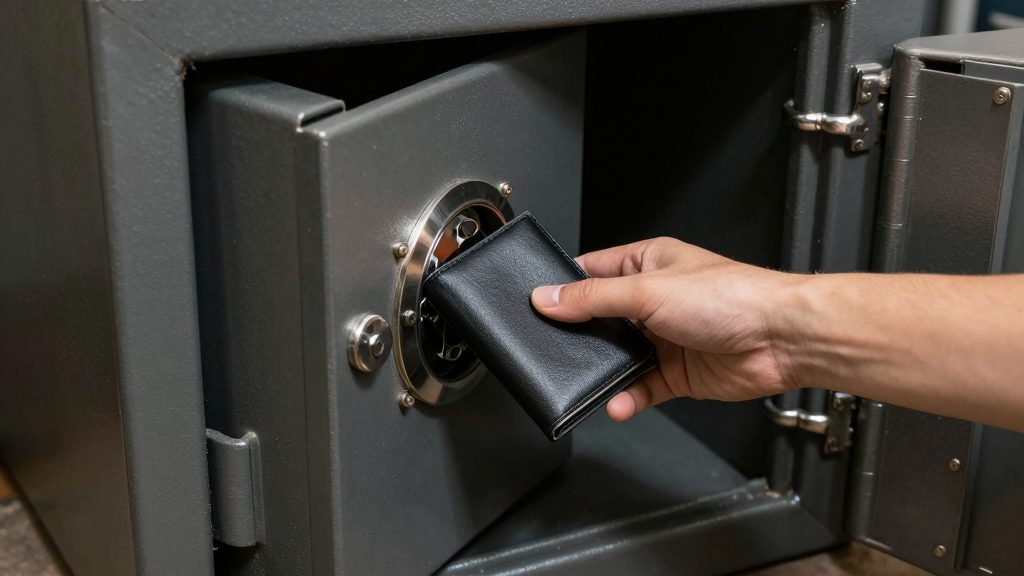
- > Choose a hardware wallet or a paper wallet. If you plan to hold coins for the long term, offline storage is essential.
- If you frequently send or receive funds:
- > Use the convenience of a software wallet or an online wallet, but consider transferring your main assets to a hardware wallet for safekeeping.
- If recovery and accessibility are important:
- > Choose a wallet that allows you to back up your private keys for recovery. Typically, this is done using a 12- or 24-word "seed phrase" (which you must save when the wallet is created). If this key is compromised, all your assets are at risk.
[Image: Why is choosing a "wallet" the most important decision when holding cryptocurrency?]
- Which wallet is recommended for beginners?
- > Start with a user-friendly software wallet like MetaMask, which has good community support. As your holdings grow, consider switching to a hardware wallet for added security.
- If you hold multiple cryptocurrencies:
- > Make sure the wallet supports a wide range of tokens. Generally, wallets like MetaMask and Ledger support a variety of cryptocurrencies.
Frequently Asked Questions
Q. Should I use a hardware wallet, or is a software wallet sufficient? A. It depends on the amount of assets you hold and your security priorities. If you hold over 1 million won (approximately $800) or plan to hold coins for the long term, a hardware wallet is essential. If you only hold under 100,000 won (approximately $80), a software wallet may be sufficient, but you must back up your recovery key separately.
[Image: Why is choosing a "wallet" the most important decision when holding cryptocurrency?]
Q. Will I lose my assets if I switch wallets? A. The wallet itself is just a storage tool; it doesn't own your assets. If you transfer your private keys correctly, your assets will remain the same. However, you must either recover your private keys from the old wallet or enter the correct recovery key into the new wallet. If you use the wrong key, you will not be able to access your assets.
Q. Which wallet is the fastest for sending funds? A. Online wallets and exchange-integrated wallets are the fastest. However, this comes at the cost of reduced security. Make sure you have a stable internet connection and that the wallet is functioning properly. While speed may be prioritized over security for urgent transactions, it's generally not recommended for essential transfers.
Related posts
Here are 4 essential practical checks to make before investing in a blockchain project.

Four Essential Conditions to Check Before Investing in Cryptocurrency.
When choosing a cryptocurrency wallet, why are "hardware wallets" considered the most secure?
How to Choose a Cryptocurrency Exchange.
Popular posts
Here are 4 essential practical checks to make before investing in a blockchain project.
Four Essential Conditions to Check Before Investing in Cryptocurrency.
When choosing a cryptocurrency wallet, why are "hardware wallets" considered the most secure?
Comments 0